
01
Object facts
Know what is being handled.
Dimensions, weight, material, fragile elements, projections, orientation and any known restrictions.
- Dimensions & weight
- Material / finish
- Balance & projections
Collection, condition control, object-specific packing, customs coordination and international movement structured around the work — not around a standard freight checklist.
Fine-art logistics begins with facts. Dimensions, material, condition, balance, projections, access and route constraints influence how the object should be protected and moved.
Dimensions, weight, material, fragile elements, projections, orientation and any known restrictions.
Visible condition, photographs, component references and existing exceptions should be captured before release.
Doors, turns, lifts, loading areas, route geometry, lifting clearances and final-position constraints matter.
Crating, internal separation, restraint, cushioning and contact zones should follow the object and movement.
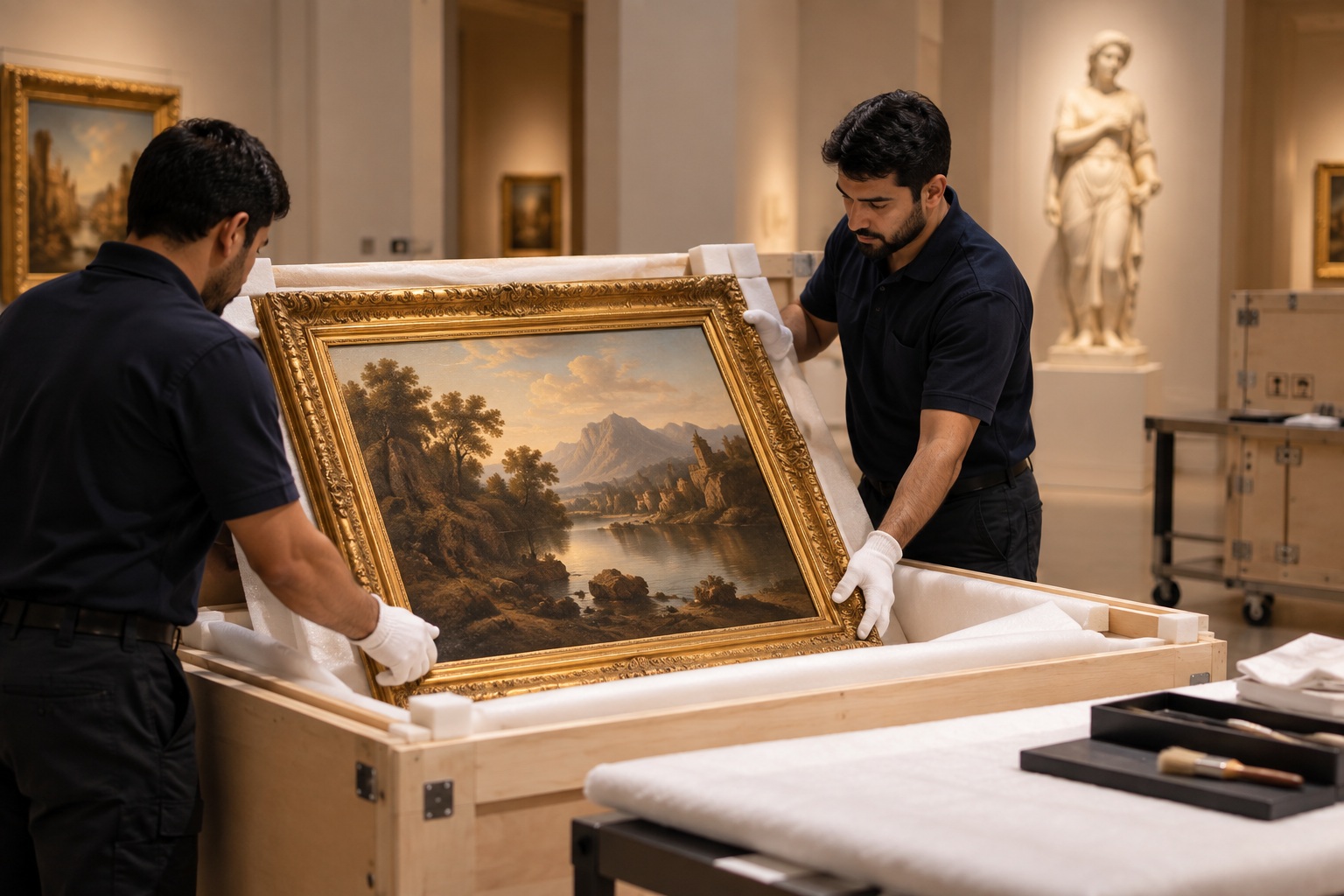 OBJECT-SPECIFIC HANDLING
A useful handling plan connects the physical object, route, people, equipment, custody points and documentary requirements into one controlled movement.
For multi-piece installations and high-value works, the operating record should keep condition evidence, component identity and custody connected throughout the movement.
The physical route may change, but the control logic should remain continuous from collection through final placement and documentary closeout.
Condition and identity captured before custody changes.
Object-specific support, restraint and crate assignment.
Movement and customs documentation prepared for the route.
Suitable road, air or sea movement with defined handovers.
Receiver, condition and inventory checked at handover.
Unpacking and final handling coordinated around the site.
Delivery, inventory and unresolved actions formally closed.
Exhibition, sale, loan, export and return movements can require different commercial and customs structures. The appropriate route should be reviewed against the actual transaction before dispatch.
Where applicable, temporary admission or export requirements are reviewed against the movement, supporting documents and authority requirements.
Entry → exhibition → returnCommercial structure, documentation, customs route and destination requirements should be aligned before the work enters transport.
Pakistan → international destinationLocal documentation, delivery planning and competent authority requirements are coordinated against the actual purpose of entry.
Arrival → release → controlled deliveryInventory, condition, customs documentation and final handover records should reconcile before the movement file is considered complete.
Verify → reconcile → closeAashmaan's supplied materials include art-logistics experience involving collection, component control, object-specific crating, customs coordination and international movement.
Public project detail remains limited to information authorized for disclosure.
Discuss an art movement →
An initial review becomes more useful when the object, condition, dimensions, route, timing and intended transaction are known before handling begins.
Object description, dimensions, weight where relevant, material, photographs, current location, destination, required timing and intended movement provide a useful starting point.
Packing requirements can be reviewed around the object's material, geometry, balance, projections, route and handling interfaces before the movement method is confirmed.
Temporary admission or export requirements may be coordinated where applicable, subject to the actual transaction, documentation and competent authority requirements.
The transport mode depends on dimensions, weight, protection method, timing, route, destination and other shipment-specific requirements.
The operating plan can connect photographic condition evidence, object or component references, custody events and destination verification so the movement retains one traceable record.
Site access, unloading, unpacking, inventory verification and final handling can be coordinated according to the specific project scope and available specialist resources.
Share the object details, route, timing and intended movement. We'll structure the review around the actual work.