
Know where cargo enters.
Port, airport or border requirements shape the first operating decisions.
Aashmaan coordinates movement through Pakistan’s principal gateways, commercial centres and border corridors — connecting each handover under one operating picture.
National coverage matters only when the operating plan remains clear from entry point to final destination. The cargo, authority, resources and next responsible party should remain visible at every stage.
Port, airport or border requirements shape the first operating decisions.
Documentation and authority should be aligned before onward movement.
Route, equipment, timing and handovers should match the cargo requirement.
Delivery evidence and unresolved actions should remain visible until closure.
Aashmaan’s network model connects major sea and air gateways with inland commercial centres and border corridors. Resources and local support are confirmed around the actual movement.
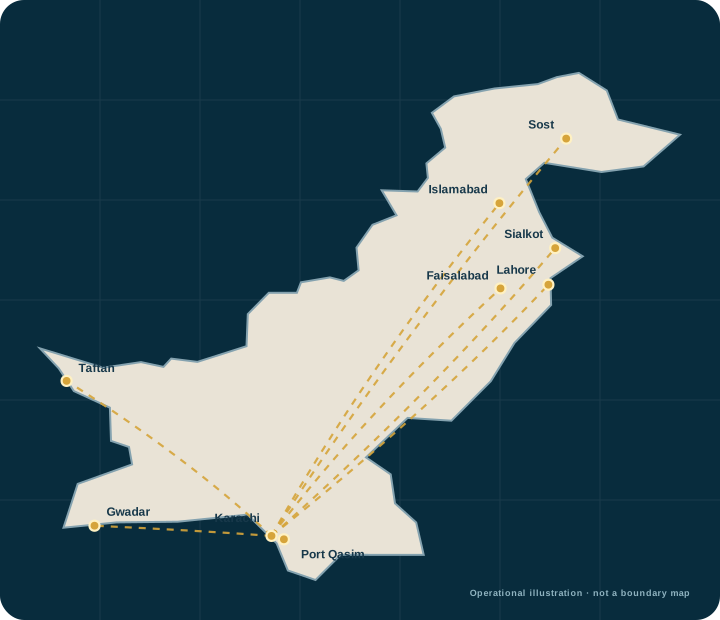
Ocean freight, containers, industrial cargo and project-entry coordination.
Commercial, manufacturing, government and distribution centres.
Regional land movements subject to current customs, border and operating requirements.
A port movement, an inland industrial delivery and a border transit do not use the same operating assumptions. Each corridor should be built around its own authorities, timing, resources and handovers.
Arrival planning, customs interface, terminal coordination and onward movement from Pakistan’s coastal gateways.
Movement into commercial, manufacturing, government and distribution environments.
Border movements structured around current authority, documentation and corridor feasibility.
These are operating points and corridors relevant to Aashmaan’s Pakistan execution model. They should not be read as a claim of owned offices, fleets or infrastructure at every location.
Head office, seaport, airport and principal international trade gateway.
Sea · Air · CustomsContainer, industrial and project-cargo gateway serving major production and infrastructure corridors.
Port · Project · IndustrialStrategic coastal gateway used where the project, trade lane and operating requirement support it.
Port · RegionalMajor commercial, industrial and distribution centre with airport and eastern corridor connectivity.
Air · Inland · IndustrialGovernment, diplomatic, project and northern distribution corridor.
Air · Government · NorthManufacturing and inland cargo centre supporting industrial supply and distribution.
Industrial · InlandExport-oriented industrial cluster with airport and inland logistics connectivity.
Export · Air · InlandNorthern border point relevant to China-facing trade movements, subject to current corridor conditions.
Border · RegionalWestern border coordination point for qualifying regional movements and applicable customs procedures.
Border · RegionalEastern land-border corridor relevant to permitted regional cargo movements and current trade conditions.
Border · CustomsThe digital control view should make the next decision visible: what has cleared, what is moving, what is waiting and who owns the next action.
The specific carrier, transporter, equipment, border route, handling resource or local partner should be confirmed for the actual cargo and movement before release.
Cargo facts, route, timing and delivery constraints.
Applicable documents, customs and corridor requirements.
Suitable transport, handling and local support confirmed.
Responsibility and escalation points remain visible.
Delivery, POD, condition and unresolved actions closed out.
Pakistan movements can involve different entry points, authorities and operating conditions. The route should be reviewed around the actual shipment.
Aashmaan coordinates Pakistan-side logistics execution through relevant gateways, commercial centres and corridors. The exact operating model and resources are confirmed around each requirement.
Karachi and Port Qasim are major gateways in the operating model, with Gwadar relevant where the actual movement and current operating conditions support its use.
Yes, subject to cargo characteristics, release status, route feasibility, equipment availability and destination requirements.
Border movements can be reviewed for corridors such as Wagah, Sost and Taftan where the trade lane, authority, customs requirements and current operating conditions permit.
No. The Network page represents operating coverage and coordination points. Resources, partners and local capability are confirmed according to the specific movement.
Share the cargo, origin, destination and timing. We’ll structure the Pakistan-side execution plan around the requirement.